New Orleans Loving Festival
Keep in Touch!
  • About
    • Artists & Activists
    • Friends
  • 2024 Events
    • 2023
    • 2022
    • 2021
    • 2020
    • 2019
    • 2018
    • 2017
    • 2016
    • 2015
    • 2014
    • 2013
    • 2012
    • 2011
  • Gallery
  • SUPPORT
  • Contact

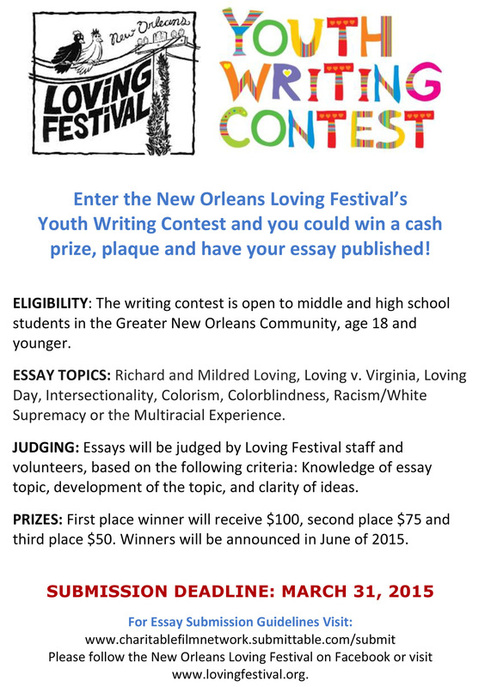
CALL FOR SUBMISSIONS - 2015 NOLF Youth Writing Contest

12/30/2014

 
Picture

New Orleans Loving Festival founder honored

11/25/2014

 
Picture
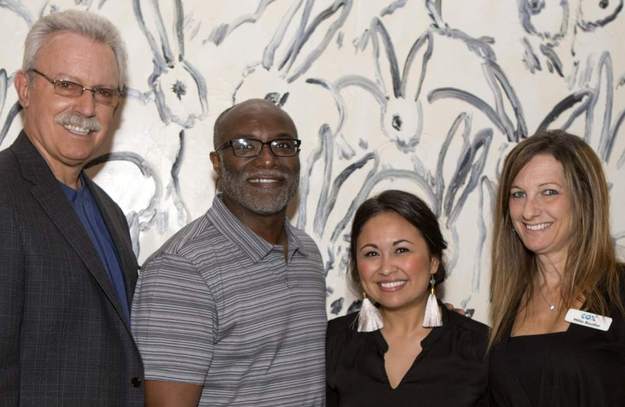
From left are *Steve Sawyer, Jerald L. White, *Kristina Lagasse and *Millie Baudier (*With Cox Communications).
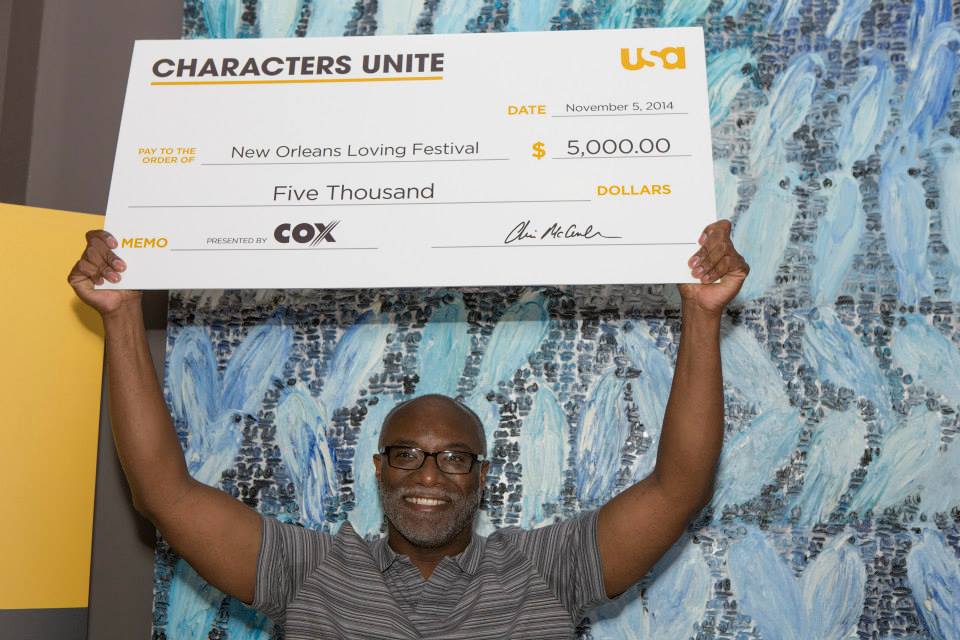
Jerald L. White, founder of the New Orleans Loving Festival and Charitable Film Network, is one of 10 recipients of the 2014 Characters Unite Award presented by the USA Network. The award, which comes with a $5,000 grant, recognizes extraordinary efforts to combat hate and discrimination and to promote greater tolerance, respect and acceptance.  More >>> 

Source: The New Orleans Advocate
#lovingfestival, #charitablefilmnetwork

THE N-WORD PROJECT

11/11/2014

2 Comments

 
Picture
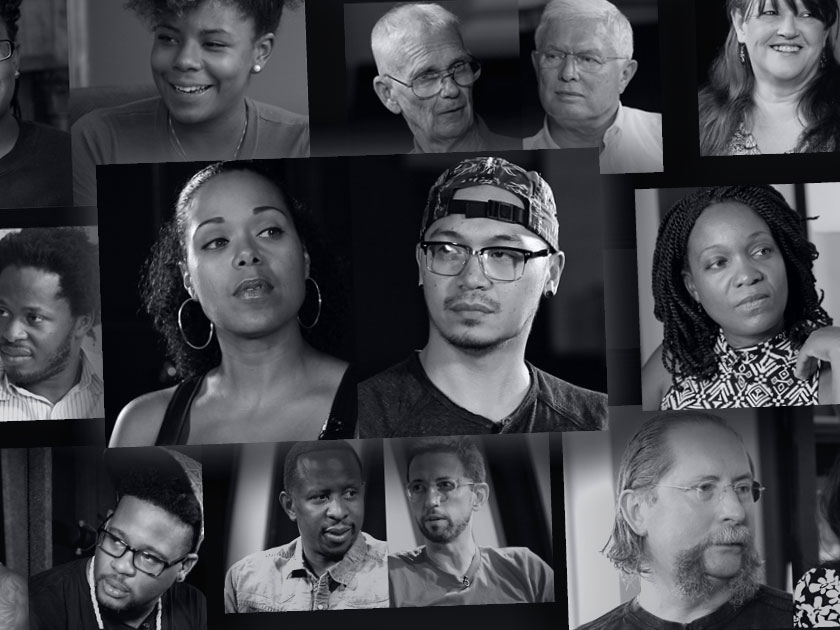
A diverse set of Americans discuss the nuance of a word that is seen as both hateful and colloquial.
EXAMINING A RACIAL SLUR ENTRENCHED IN AMERICAN VERNACULAR THAT IS MORE PREVALENT THAN EVER.

Following several incidents involving players using the n-word, the National Football League this year instructed game officials to penalize players who used the word on the field of play. The policy, though, was widely criticized as being heavy-handed and out of touch. As the league wrestled with the issue, a team of Washington Post journalists examined the history of this singular American word, its spread through popular culture and its place in the vernacular today.  MORE >>>   Check out The N-Word Project VIDEOS.

Source: The Washington Post  #lovingfestival
2 Comments

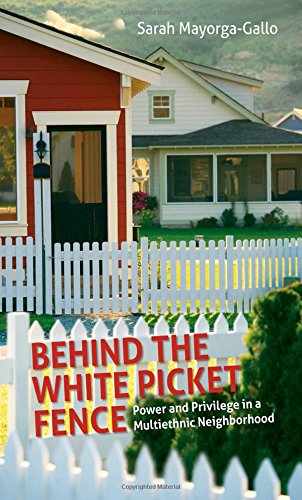
BEHIND THE WHITE PICKET FENCE Power and Privilege in a Multiethnic Neighborhood

11/11/2014

1 Comment

 
Picture
The link between residential segregation and racial inequality is well established, so it would seem that greater equality would prevail in integrated neighborhoods. But as Sarah Mayorga-Gallo argues, multiethnic and mixed-income neighborhoods still harbor the signs of continued, systemic racial inequalities. Drawing on deep ethnographic and other innovative research from "Creekridge Park," a pseudonymous urban community in Durham, North Carolina, Mayorga-Gallo demonstrates that the proximity of white, African American, and Latino neighbors does not ensure equity; rather, proximity and equity are in fact subject to structural-level processes of stratification. Behind the White Picket Fence shows how contemporary understandings of diversity are not necessarily rooted in equity or justice but instead can reinforce white homeowners' race and class privilege; ultimately, good intentions and a desire for diversity alone do not challenge structural racial, social, and economic disparities. This book makes a compelling case for how power and privilege are reproduced in daily interactions and calls on readers to question commonsense understandings of space and inequality in order to better understand how race functions in multiethnic America.  
Read An Excerpt and MORE >>> 
Source: racismreview.com.   #loving festival
1 Comment

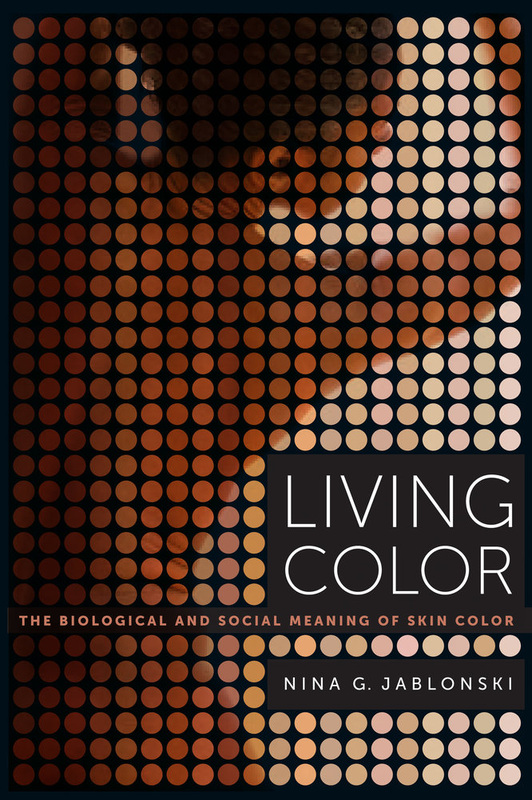
LIVING COLOR The Biological and Social Meaning of Skin Color

11/11/2014

0 Comments

 
Picture
LIVING COLOR is the first book to investigate the social history of skin color from prehistory to the present, showing how our body’s most visible feature influences our social interactions in profound and complex ways. Nina Jablonski begins this fascinating and wide-ranging work with an explanation of the biology and evolution of skin pigmentation, tracing how skin color changed as humans moved around the globe, exploring the relationship between melanin and sunlight, and examining the consequences of mismatches between our skin color and our environment due to rapid migrations, vacations, and other life-style choices.

Aided by plentiful illustrations, this book also explains why skin color has become a biological trait with great social meaning—a product of evolution perceived differently by different cultures. It considers how we form impressions of others, how we create and use stereotypes, and how prejudices about dark skin developed and have played out through history—including as justification for the transatlantic slave trade. Offering examples of how attitudes toward skin color differ in the United States, Brazil, India, and South Africa, Jablonski suggests that a knowledge of the evolution and social importance of skin color can help eliminate color-based discrimination and racism. (University of California Press, 2014)  Read An Excerpt and MORE >>>   Source: racismreview.com.  #lovingfestival 
0 Comments

USA Network Puts New Orleans Loving Festival Founder in the Spotlight

11/7/2014

 
Picture
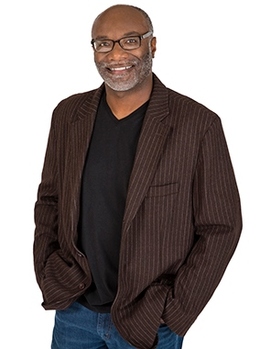
New Orleans Loving Festival Founder, Jerald L. White
Jerald L. White, Founder of the New Orleans Loving Festival and Charitable Film Network, was honored on Nov. 5th with USA Network's Characters Unite Award during a ceremony at The Martine Chaisson Gallery in New Orleans.

USA Network, along with Cox Communications, selected 10 honorees for the 2014 Characters Unite Award.  Characters Unite is USA's multi-platform public service campaign to address social injustices and bridge cultural divides. The award winners were selected from hundreds of nominees for their extraordinary efforts to combat hate and discrimination and promote greater tolerance, respect and acceptance in their communities.  MORE >>>  #lovingfestival

New Orleans Loving Festival Receives Community Partnership Award!

9/19/2014

 
Picture
Please welcome our new program partner the NEW ORLEANS JAZZ & HERITAGE FESTIVAL and FOUNDATION. "NOJHFF" has awarded the New Orleans Loving Festival a $1,500 Community Partnership Grant to support the publication of a new literary zine called MIXED COMPANY.

The festival publication will feature short stories by local writers - Addie Citchens, Jeri Hilt, Ambata Kazi-Nance, J.R. Ramakrishnan, and Kristina K. Robinson. Stay tuned for more publication details.  For more information about NOJHFF, please visit www.jazzandheritage.org.  #lovingfestival

Loving Festival Founder Honored With Characters Unite Award

7/28/2014

 
Picture
The USA Network recently announced the recipients of the 2014 Characters Unite Awards.  New Orleans Loving Festival Founder, JERALD L. WHITE was among the ten winners selected from hundreds of nominees for their extraordinary efforts to combat hate, intolerance and discrimination, and making significant contributions to promoting greater tolerance, respect and acceptance in their communities. Characters Unite Honorees will be acknowledged during hometown award ceremonies and will receive $5,000 grants from USA Network and distributor partners – Bright House Networks, Cablevision, Charter, Comcast, Cox Communications, Mediacom, Suddenlink, Time Warner Cable - to support their projects or related nonprofit organizations. Additionally, honorees will be featured on-air in a PSA...  MORE>>>
Picture

What “We” Can’t See

7/21/2014

 
Artist Samantha Wall at Stella Jones Gallery by Jeri Hilt
The American South has been inundated with the stories and likenesses of the mulatto and—if you’re in Louisiana—Creole characters. Portrayals of multi-racial women specifically have ranged from substantial and transformative to exploitative and vapid.  As an African American woman—with a cultural understanding that nearly all of the African American community has mixed ancestry of variant degrees—I found the portraits of multi-racial women in Wall’s exhibition, Indivisible, arresting if not remarkable.  

There is an undeniable universality in their likenesses. These were women I recognized, both for the distinct traces of their various ethnicities, and for the laughter and vulnerability in their expressions. Completely distinct and apart from their racial composition, the subjects of Wall’s exhibit are portrayed in their truth. In this way, Wall’s portraits challenge the socially constructed tiers of beauty ascribed to women of color—with beauty being determined, externally, on a scale of lightest to darkest with a predilection for European features.

When asked about the impulse behind her art she explains that themes of identity will most likely stay with her work for a long time to come.  “I’m interested in the ways shame operates in society,” says Wall.
Picture
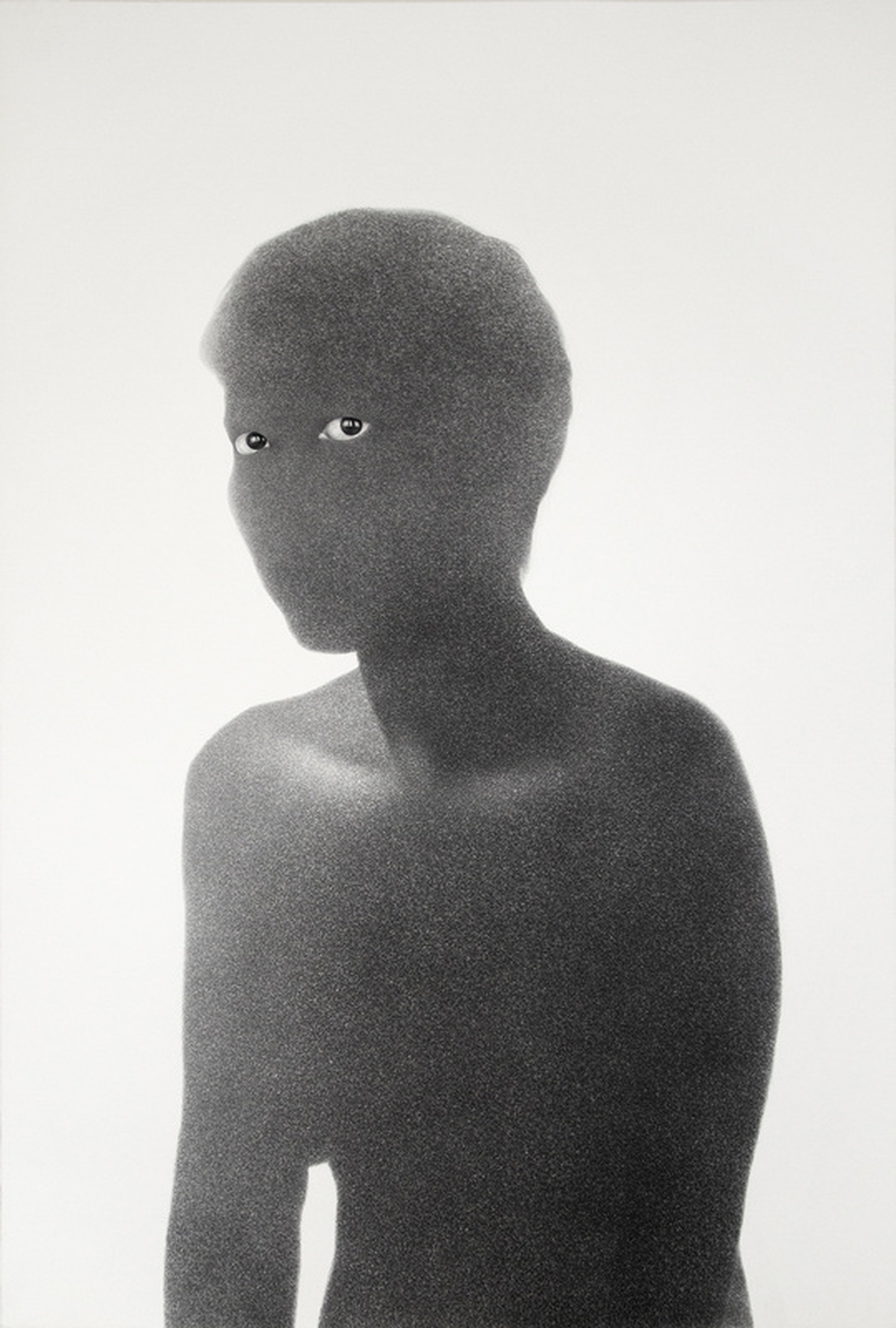
"What I Can’t See" by Samantha Wall
In our interview she discussed the palpability of shame, and it’s evidence in her own life. For Wall, this concept has been linked more directly with the country of her birth.  Born in Korea and relocated to the U.S. at the age of four, Samantha Wall moved around quite a lot, and resided in Fort Jackson, South Carolina for most of her childhood. For a time Wall never questioned her parentage and believed that her white stepfather, also the father of her siblings, was also her father.  However, in 2009 Wall took a DNA test, and discovered that her father was a man of African descent. Traces of European and Native ancestry would imply that he is also, most likely African American.

Samantha explained that finding out her father’s ethnic background was significant in ways that she had not anticipated. Even before she knew that she was both Korean and African, Wall describes feeling lobbied between cultural groups rather than feeling a part of them. This confluence and fracturing of identity is an observable theme in this collection.

Included in her show is an astonishing self-portrait. Only her eyes are visible to the viewer, while the rest of her own image is a silhouette blacked out in charcoal. The title of the portrait, What I Can’t See, reveals what is otherwise invisible to the viewer, and Samantha herself. This level of honesty and vulnerability in art and the socio-political constructs of race forces us all to reconcile its incongruence, and the falsities embedded in who we perceive both ourselves and each other to be—especially when those perceptions are based on phenotypic observations.

Wall’s art exposes and deconstructs socially and politically constructed barriers that regularly impact how we engage with individuals of color. The presence of her work in New Orleans exposes and reveals these concepts in another environment. The portraits belie the inaccuracy and conceptual limitations of deeply entrenched notions of race and ethnicity. As an artist of color who is also a woman, our greatest artistic challenge is to represent women of color, however they identify, in their complete humanity. For Wall to accomplish this in a two-dimensional art form is both rare and exceptional. More than portraits, her work renders all women visible in liberating ways, Indivisible.   

Samantha Wall lives and works in Portland, Oregon. She is married to video and installation artist Stephen Slappe. For more information about her work visit: www.samanthawall.com.  Wall's exhibit is part of the 4th Annual New Orleans Loving Festival and will run through July 31st at Stella Jones Gallery - 201 St. Charles Avenue, New Orleans, LA.  www.stellajonesgallery.com

Jeri Hilt is a former lecturer of African Studies and International Development issues at Tennessee State and Dillard Universities. She has also worked with research, development, and teaching projects in South Sudan, Kenya, Burundi, and the United Kingdom. Hilt, a Louisiana native, currently teaches literacy intervention at an elementary school in New Orleans.

#lovingfestival

New Orleans' Free People of Color Rediscovered

7/6/2014


Local art exhibits highlight mixed race identity

Picture
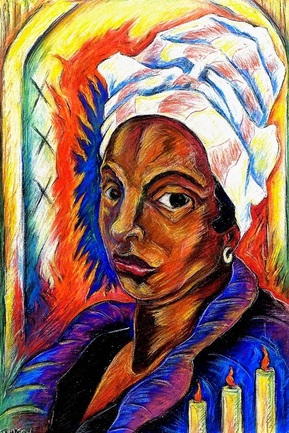
Marie Laveau Free Woman of Color by Jose Torres-Tama.
It is in many ways a secret history. In antebellum New Orleans, the gens de couleur libres, or free people of color (FPC), experienced a golden age of influence and creativity unknown outside Louisiana. It was almost forgotten even here after segregation became the law in the 1890s, so it may come as a surprise that they were once nearly half of this city's population. By 1810, much of Haiti's Afro-Creole professional class had fled the devastation of the Haitian revolution. Here their skills were soon seen in the building of Marigny, Treme and parts of the French Quarter where they helped to create much of we think of as New Orleans culture. 

Artist-activist Jose Torres Tama, an Ecuador native who grew up in New Jersey,  became intrigued by their legacy after moving here in 1984. Over the years his interest evolved into a series of portraits and a book, both commissioned by the Ogden Museum, and now this exhibit at Le Musee de FPC.  MORE >>>
<<Previous
Forward>>
    Picture
    The New Orleans Loving Festival is a Multiracial Community Celebration & Film Festival that challenges racism through outreach and education. The "Loving Festival" is an initiative of Charitable Film Network.

    Contributors:

    JW Bottletree
    ​Rachel Dangermond
    Elizabeth Underwood

    Archives

    January 2017
    December 2016
    October 2016
    August 2016
    June 2016
    April 2016
    January 2016
    July 2015
    June 2015
    April 2015
    March 2015
    January 2015
    December 2014
    November 2014
    September 2014
    July 2014
    June 2014
    May 2014

    Categories

    All
    Advocacy
    Art & Culture
    Books
    Education
    Film
    LGBTQ
    Loving V Virginia
    Multiracial
    Racial Justice

    RSS Feed

Proudly powered by Weebly